Introduction:
This report presents the results of a comprehensive analysis of a Potentially Unwanted Application (PUA) identified during routine security monitoring. PUAs are software programs that, while not overtly malicious in the traditional sense, often exhibit behaviors that undermine system performance, compromise user privacy, or introduce security risks. These applications typically rely on deceptive installation mechanisms, unwanted bundling with legitimate software, or aggressive advertising and tracking techniques.
The purpose of this analysis is to evaluate the sample’s functional characteristics, behavioral patterns, and associated risks. The assessment includes static and dynamic analysis, examination of file and registry artifacts, network communication profiling, and a review of persistence mechanisms and privilege requirements.
This introduction establishes the context for the technical details that follow and frames the sample’s potential impact on system integrity, user experience, and overall security posture.
Preliminary Information About Sample:
MD5: 6717e7dc73fb1d4febb1da10bbcb41c5
SHA-1: 5fb6ae10d167ada29f50b3693af18a961b961057
SHA-256: 2d482953418daf3dd3e16bcdcd2adc4bab16a6b9b3cb190b2840d8d4ffe359b2
Imphash: f8e4a22bcb1b836585534b93f63c1414
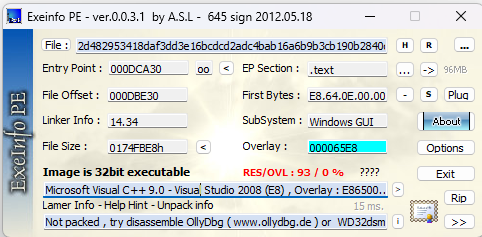
Compiler: Microsoft Visual C++
Internal Name: GoToResolveUnattendedUpdater.exe
Static Analysis:
Digital Signature:
The sample is digitally signed as shown in the following image.
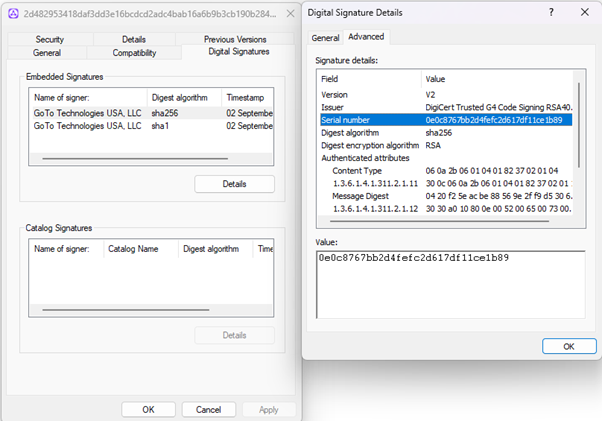
Company Name: GoTo Technologies USA, LLC
Serial Number: 0e0c8767bb2d4fefc2d617df11ce1b89
Dynamic Analysis:
The sample installs a Potentially Unwanted Application (PUA) and starts threads in the background.
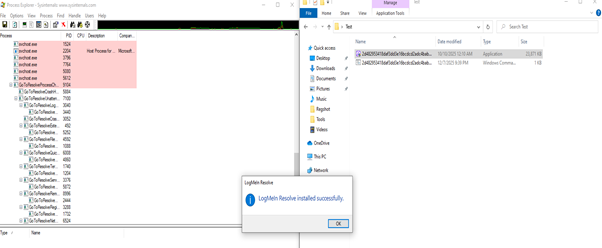
GoToResolveUnattended.exe is an executable file for the GoTo Resolve Unattended Access application, which allows IT professionals to remotely access and support computers that are not being actively used by an end-user. This is a component of GoTo’s remote support and management software, used for tasks like forced installations and updates.
But malware actors can use such applications to infect and insert their own malicious software like Trojans, Backdoors etc. to carry out malicious attacks or show excessive advertisements.
When the sample is run, it installs an application “GoToResolve”.
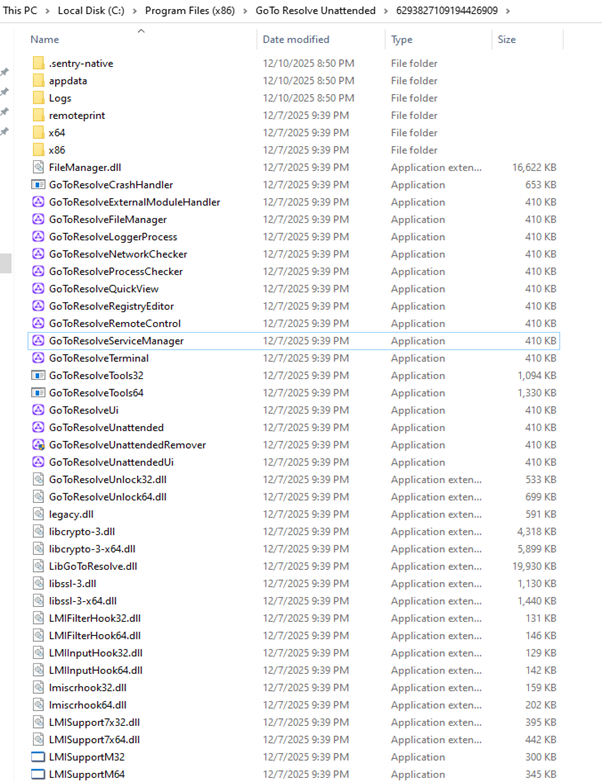
Installed Path Folder:
C:\Program Files (x86)\GoTo Resolve Unattended\6293827109194426909\
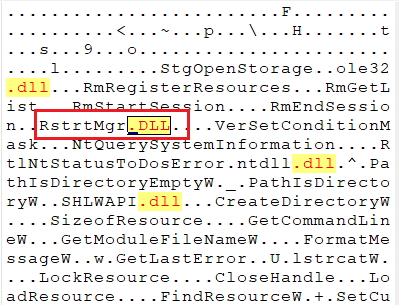
Accessing Restart Manager
The RstrtMgr DLL (Restart Manager) is being loaded by an uncommon process. This library has been used during ransomware campaigns to kill processes that would prevent file encryption by locking them (e.g. Conti ransomware, Cactus ransomware). It has also recently been seen used by the BiBi wiper for Windows. It could also be used for anti-analysis purposes by shutting down specific processes.
Bundled File:
When the sample is unzipped, we get a bundled file with the sample.
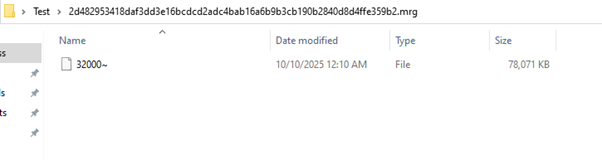
File Info->
Name: 32000~
MD5: d37158f86aa1d35a0ce4a92e2fcb3f74
SHA-1: 170b69d9d1cd1c9daf528fb7a321a21ccad32982
SHA-256: 7da4fff270d5716556c27ccfe231637638e498c004413d362b9d19a76e80716d
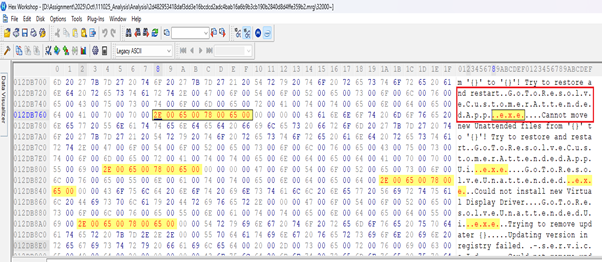
This bundled file contains most of the instructions for installation and management of GoToResolve app.
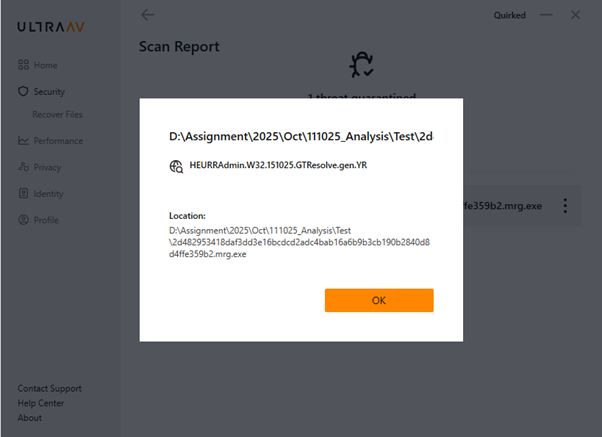
Detection by UltraAV:
Conclusion:
- The analysed sample, detected as HEURRemoteAdmin.GoToResolve.gen, is associated with the GoTo Resolve Unattended Access application, a legitimate remote administration tool that can be classified as a Potentially Unwanted Application (PUA) in uncontrolled environments.
- Static analysis confirmed that the executable is digitally signed by GoTo Technologies USA, LLC, indicating a legitimate origin; however, a valid digital signature does not eliminate the risk of misuse.
- Dynamic analysis revealed that the sample installs and executes background threads silently, establishing unattended remote access functionality without clear user interaction or explicit consent.
- The application installs itself persistently under C:\Program Files (x86)\GoTo Resolve Unattended\, indicating long-term presence on the affected system.
- The loading of the Restart Manager (RstrtMgr.dll) by the sample is notable, as this library has been observed in ransomware and wiper malware to terminate interfering processes, suggesting potential abuse for anti-analysis or operational control.
- While no direct malicious payload was observed during execution, the tool’s remote access capabilities present a significant attack surface that can be exploited by threat actors to deploy secondary malware, maintain persistence, or conduct unauthorized system control.
- The detection of the sample by UltraAV further supports its classification as a security risk in enterprise and personal computing environments.
- Based on the observed behaviors and associated risks, the sample should be treated as a PUA with elevated threat potential, warranting removal unless explicitly authorized, monitored, and managed by organizational security policies.
- It is recommended that organizations implement application whitelisting, endpoint monitoring, and user awareness controls to prevent the unauthorized deployment of similar remote administration tools.
Indicators of Compromise (IOC):
MD5: 6717e7dc73fb1d4febb1da10bbcb41c5
SHA-1: 5fb6ae10d167ada29f50b3693af18a961b961057
SHA-256: 2d482953418daf3dd3e16bcdcd2adc4bab16a6b9b3cb190b2840d8d4ffe359b2
Imphash: f8e4a22bcb1b836585534b93f63c1414